
Checking Criminal History in Jefferson
Begin with the office that created the Jefferson record. A town incident or arrest report starts at Jefferson Police. A jail intake belongs to the Ashe County Sheriff's Office, even when a Jefferson officer made the arrest. Once a charge reaches court, the Ashe Clerk of Superior Court and North Carolina eCourts Portal become the sources for hearings, filings, dispositions, and judgments. Jefferson has no separate municipal court database.
- Call Jefferson Police for an incident or arrest report created by the town department.
- Give the date, location, report number if known, and a precise description of the record sought.
- Check Ashe County booking reports or call the jail when the question concerns custody.
- Search eCourts Portal with the person or case number, Ashe as the location, and relevant filters.
- Use the clerk's counter or certified county search when Portal does not supply the needed file or certification.
This order keeps Jefferson records at city altitude. It also prevents a common mismatch, such as asking the sheriff for the complete police narrative merely because the person later entered the county jail.
Requesting Jefferson Police Records
The Jefferson Police Department is at 213 East Main Street, Jefferson, NC 28640, and its telephone is 336-846-5529. No dedicated online police-record form, public arrest blotter, crime map, or mobile app was found on the town's official site. A requester should call or send a focused written request instead. State the event date and time, place, incident or report number if known, involved parties only as needed to locate the file, exact record wanted, and whether inspection or a paper or electronic copy is preferred.
The official Jefferson police contact page shows the local department and its direct access point.
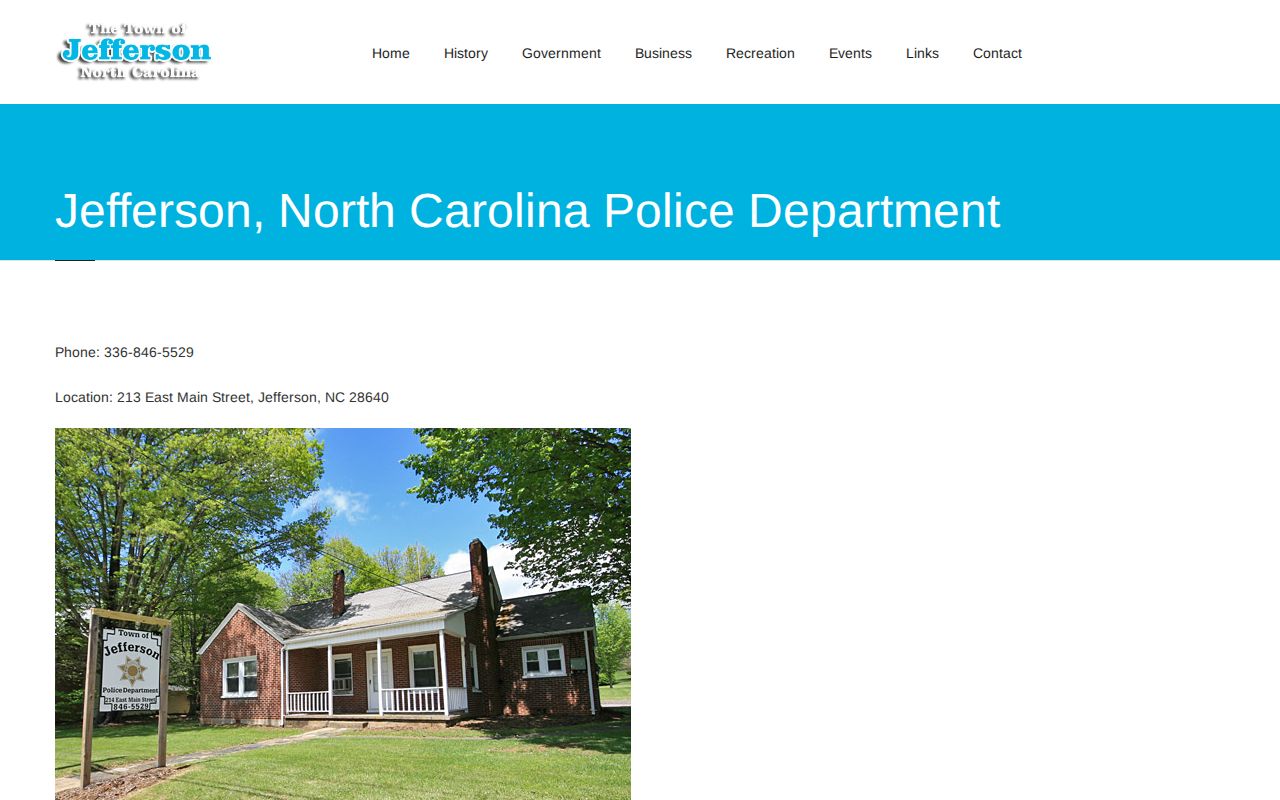
That direct town channel is crucial because an Ashe County booking entry cannot provide Jefferson Police's complete investigative file. Fees and turnaround were not officially published, so ask about cost and delivery before sending a broad request.
| Request Detail | What to Provide | Why It Helps |
|---|---|---|
| Event | Date, time, and Jefferson location | Separates similar calls and incidents |
| Record ID | Incident or report number, if known | Points staff to the exact file |
| Record Scope | The specific report or public fact requested | Avoids asking the city to create a new compilation |
| Delivery | Inspection, electronic copy, or paper copy | Lets staff confirm available format and cost |
Jefferson Police Department Records
Jefferson Police creates reports for events the department investigates within town. Chief Aaron Reed is identified on the current town employee directory. The public portion of an arrest record can include core event and arrest facts, but the investigative narrative is treated differently under North Carolina law. That means a request for "everything" may draw a narrower response than a request for an identified public arrest-information field or a specific releasable report.
The town's official employee directory identifies the current Jefferson police leadership.
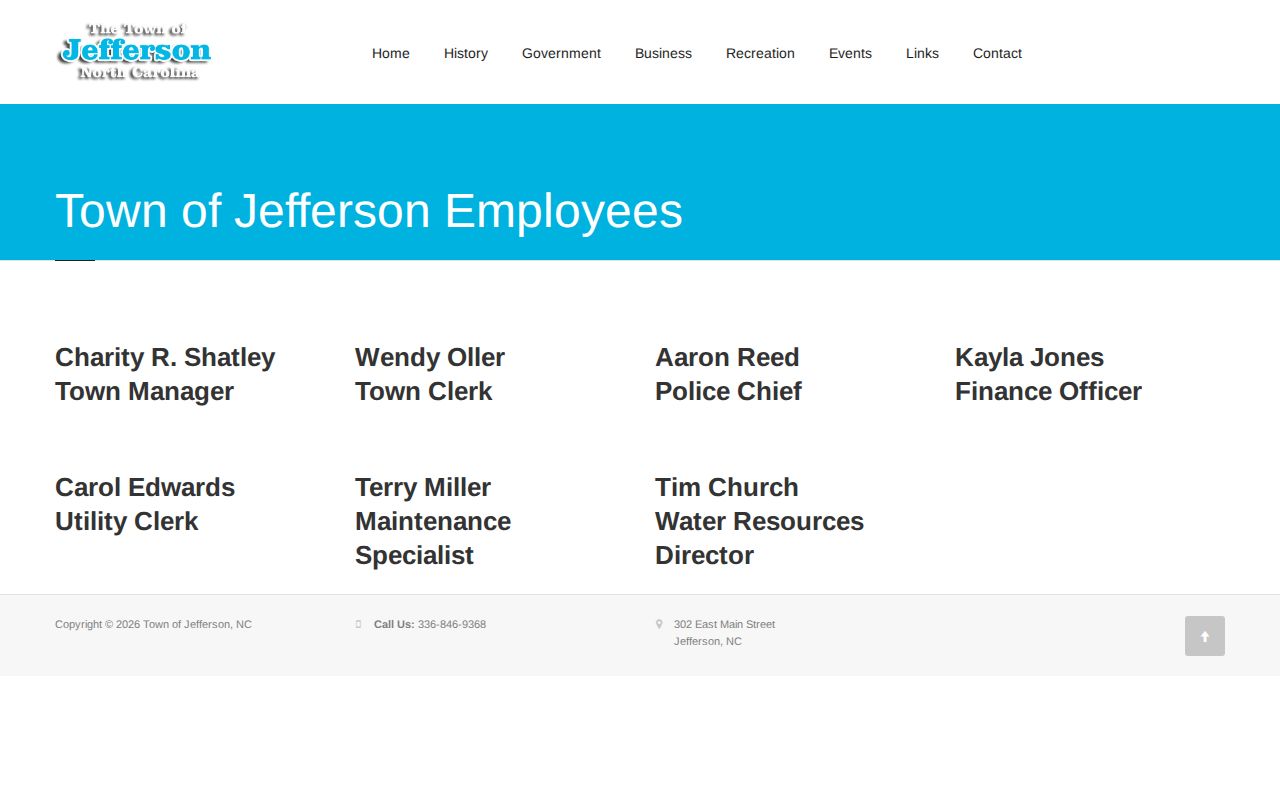
Office identity helps route a request, but it does not change the custodian rule. A sheriff deputy or Highway Patrol officer may create the incident record for an event with a Jefferson mailing address. Confirm the arresting or investigating agency before assuming Jefferson Police holds the file.
Jefferson Police Department
213 East Main Street
Jefferson, NC 28640
336-846-5529
Call for records procedure and availability
Jefferson Records at Government Circle
Jefferson is both a town and the Ashe County seat, so major record offices sit only a short distance from the town police station. The active Ashe County Courthouse is at 150 Government Circle. The clerk occupies Suite 3100, opens weekdays from 8:30 a.m. to 5:00 p.m., and can be reached at 336-219-1400. The sheriff and detention center sit next door at 140 Government Circle.
This compact layout does not merge the records. Jefferson Police retains its town incident file. The sheriff creates the jail intake and booking record. The clerk keeps the District or Superior Court case file. A visitor can use a free public terminal at the courthouse, ask to inspect a paper file, or submit AOC-CR-314 with $25 for a certified name-based Ashe County search. The broader Ashe County criminal history overview explains the county and state layers in more depth.
Jefferson Arrests and Bookings
Jefferson does not run a separate city jail. A person taken into custody by Jefferson Police is booked at the Ashe County Detention Center, 140 Government Circle. The jail creates intake data, while the police department keeps the incident record that led to the arrest. The sheriff publishes monthly booking-report PDFs as dated snapshots and answers current custody questions through the jail line at 336-846-5611.
A Jefferson place name in a county report does not prove Jefferson Police made the arrest. Sheriff deputies, Highway Patrol, and other agencies also work in or near town. Look for the arresting-agency field, then seek the underlying report from that agency. For the county booking channel and its limits, the Ashe County arrest lookup separates recent booking facts from later court outcomes.
Note: A booking allegation marks the intake claim at that time; it is not a finding of guilt or the court's final charge.
Jefferson Incident and Court Records
A Jefferson Police report and an Ashe court case answer different questions. The report concerns the event, the initial response, and facts the agency recorded. The case file shows what the prosecutor filed, when hearings occurred, how charges changed, and whether the matter ended in dismissal, plea, trial result, or sentence. One can exist without the other. Police may investigate an event that never becomes a filed case, and a citation can reach court without a jail booking.
Ask Jefferson Police when the goal is the town incident. Ask the clerk when the goal is the charge or result. Search Portal for a fast index, but use the clerk for paper documents, older converted material, and certified searches. Names alone can match the wrong person, so compare case number, location, filing date, and available party details before drawing a conclusion.
Municipal Court Records in Jefferson
Jefferson has no separate municipal court in North Carolina's court structure. Traffic, ordinance, misdemeanor, and criminal matters tied to the town proceed through Ashe District Court, with felony trials and certain other matters in Ashe Superior Court. Both sit at the active courthouse. A searcher should choose Ashe in eCourts Portal, not look for a Jefferson municipal docket.
| Court Name | Ashe County District Court or Superior Court, depending on the charge and stage |
|---|---|
| Jefferson Case Types | Traffic, ordinance, misdemeanor, preliminary felony, and felony matters routed through the state court system |
| Case Lookup | North Carolina eCourts Portal, courthouse public terminal, or clerk counter |
| Docket Contents | Case number, location, type, filing date, status, parties, events, charges, hearings, and dispositions where public |
| Certified Search | AOC-CR-314 filed with the Ashe Clerk for a $25 single-county name search |
Sealed and confidential records, sensitive documents, and victim data do not appear in ordinary public returns. A blank result is a reason to check search format and the clerk's terminal, not proof that no Jefferson record exists.
Searching Jefferson Criminal Cases
Use the official North Carolina eCourts Portal with a case number or party name as the initial search criteria. Advanced filters cannot stand alone. Set location to Ashe and narrow by case type, status, or filing range only when needed. Ashe's county identifier is 040, and Enterprise Justice case numbers end with -040.
A case-number wildcard needs at least four characters plus an asterisk. A party wildcard uses at least three last-name characters and one first-name character before the asterisks. Portal results omit victims. If no case matches, recheck spelling, wildcard format, search type, and location. An older or document-level Jefferson file may still require the public terminal or paper file at the clerk counter.
Where Jefferson Records Go
Jefferson records split as a case develops. Police keep the incident or arrest report. The county jail makes a booking record if custody occurs. A magistrate handles initial process and release conditions, the prosecutor decides which charge proceeds, and the clerk maintains the court file. Fingerprints and arrest information can feed the state's computerized criminal history, while the court is expected to send matched dispositions back.
Record flow: Jefferson Police Department › Ashe County Courts › North Carolina State Bureau of Investigation, Criminal Information and Identification Section
Each stage can update at a different pace. Portal may show a hearing while the fingerprint-supported state file waits for a matched disposition. An old booking PDF may remain after release or dismissal. Review the original town report and court outcome before treating the different records as inconsistent.
Jefferson Courthouse Record Trap
The domed 1904 courthouse at 301 East Main Street is Jefferson's best-known civic landmark, but it is not the active criminal clerk counter. Modern court records are at 150 Government Circle. The old and new sites are close enough that a photo or search result can look plausible, which makes the distinction easy to miss when planning an in-person records visit.
The official Town of Jefferson source supplies the town setting and municipal context.
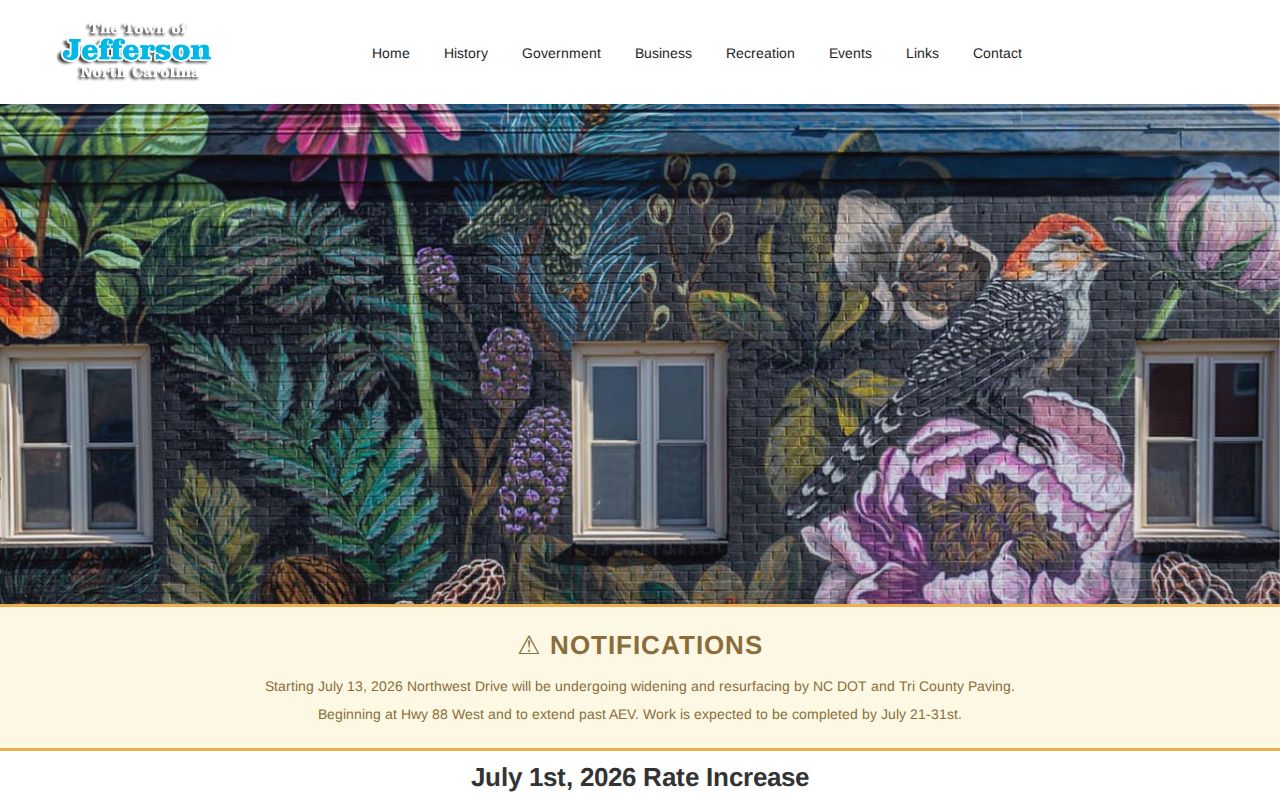
Use East Main Street for Jefferson Police and town business. Use Government Circle for the clerk, court file, jail, sheriff, and magistrate channels. This local split saves a wasted stop and keeps a request with the right custodian.
Keeping Jefferson Record Custodians Straight
When Jefferson Police has the report but the sheriff has the booking, ask each office only for its own record. Start with the police department for the incident narrative and releasable arrest facts. Use the jail line or monthly report for intake, release, bond, and custody information. Move to the clerk for the formal case and disposition. This three-office path is normal, not evidence that one office lost the file.
The same rule helps when names or dates differ. Note the agency, report number, booking identifier, and court case number as separate keys. A charge label may change after a prosecutor reviews the police allegation. If the concern is a court record error, contact the clerk; if it is an incident report field, return to Jefferson Police. Do not ask one office to rewrite another custodian's record.
Public Access Rules in Jefferson
North Carolina law gives the public broad access to government records but preserves specific exceptions. Jefferson Police investigative material is generally nonpublic under G.S. 132-1.4, while defined arrest and event facts must be released. Court records are open for inspection and copying under G.S. 7A-109 unless another law seals or protects them. A narrow request tied to an existing record works better than a demand that town staff answer questions or create a new summary.
Key Statutes:
North Carolina Public Records Law makes government records inspectable unless another law creates an exception and permits lawful copy costs.
G.S. 132-1.4 separates releasable arrest and event facts from protected criminal investigative records.
G.S. 7A-109 directs clerks to maintain public court records for inspection and copying, subject to confidentiality rules.
Protected identifiers, sealed matters, juvenile files, victim information, and sensitive documents do not become public merely because a Jefferson event reached court. Inspect the record that is available and verify the result with the office that created it.