
Ashe County Criminal Court Cases
Ashe County District Court handles misdemeanors, infractions, initial appearances, and the early stages of felony matters. Superior Court conducts felony trials and hears misdemeanor appeals for a new trial, known as an appeal de novo. Both divisions sit at the active courthouse in Jefferson. There is no separate municipal criminal court for Jefferson, West Jefferson, or Lansing. One elected Clerk of Superior Court keeps the criminal case files for both trial divisions.
An Ashe County criminal file follows the charge presented to the court. It can identify the filed offense, court events, plea, judgment, and sentence. That makes an Ashe County case more useful for a final outcome than a sheriff booking sheet, which records the allegation at jail intake. District Attorney staff prosecute Ashe County cases but do not serve as the records custodian. The Ashe County clerk is the proper source for an official criminal court case file.
The North Carolina Judicial Branch Ashe County page identifies the local districts and court services. Its court overview is shown below.
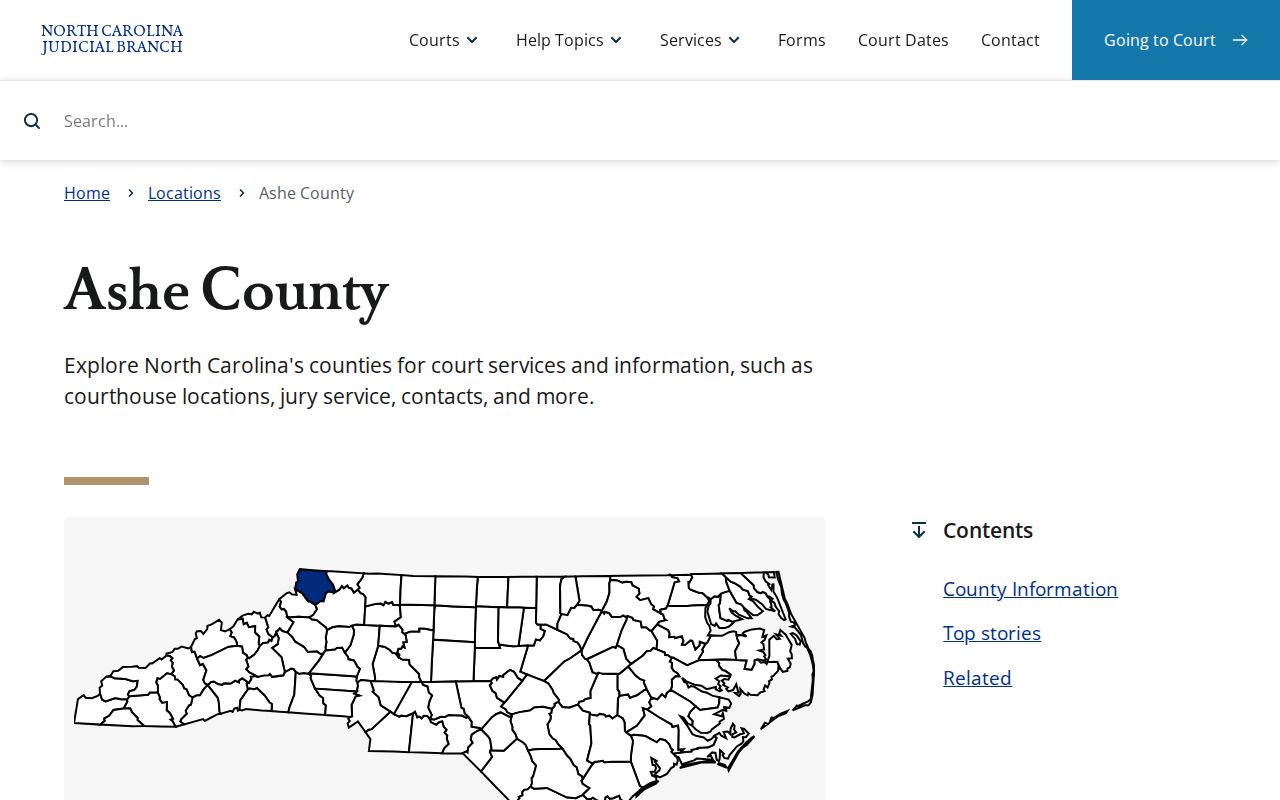
The official Ashe County location page is the best place to check current calendars, closures, and local service notices before an Ashe County courthouse visit.
Ashe County eCourts Smart Search
The North Carolina eCourts Portal is the main remote search channel for Ashe County criminal cases. Smart Search accepts a party name or case number. Advanced filters can then limit results by Ashe location, party details, case type, status, or filing dates. Portal became active in Ashe County on July 21, 2025, and the statewide Enterprise Justice rollout finished later that year. Older converted files can have less complete electronic document sets than newer cases.
The Portal screen displayed below is an Ashe County case index and docket interface. It is not an SBI fingerprint history or a certified Ashe County search.
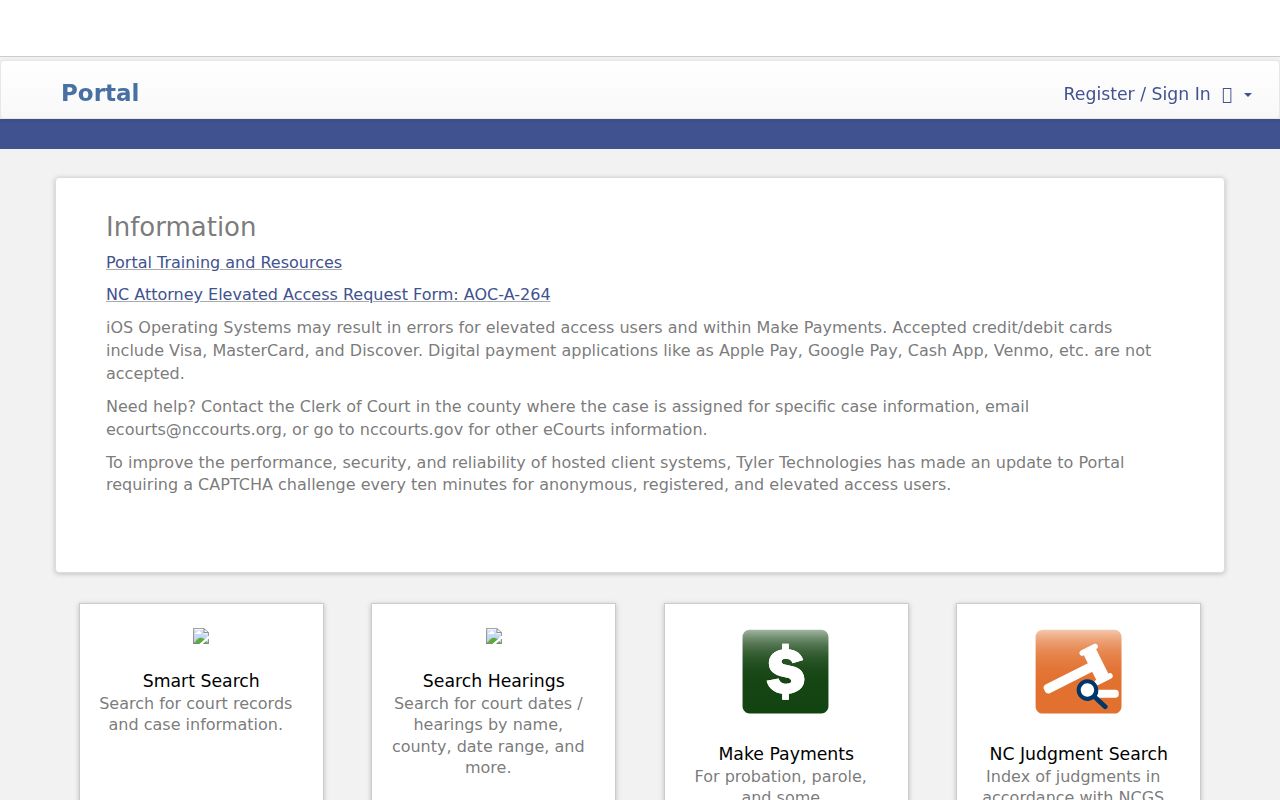
Use the result to identify the Ashe County case and its events, then obtain any needed certified Ashe County record from the clerk.
Searching Ashe County Case Records
Begin with the most exact Ashe County identifier available. Ashe County case numbers in Enterprise Justice use a two-digit year, case-type letters, a six-digit sequence, and the county identifier 040. A typical Ashe County criminal format is YYCR######-040. A name search is useful when the number is unknown, but similar names can return unrelated cases. Birth-date filters and the Ashe County location help narrow those results.
- Open Smart Search and enter the full case number or a party name. For a case-number wildcard, use at least four characters followed by an asterisk.
- For a party wildcard, enter at least three last-name characters plus an asterisk and one first-name character plus an asterisk.
- Expand Advanced Filtering only after entering search criteria. Select Ashe County and add case type, status, or filing dates when useful.
- Open Case Summary and review the parties, charges, events, hearings, dispositions, and financial sections. Cross-check Judgment Search when a final result matters.
- Ask the Clerk of Superior Court for the paper file, a copy, or a certified Ashe County search when Portal does not supply the needed proof.
Official Portal training and search resources document wildcard use, search modes, and common errors. The training interface appears below.
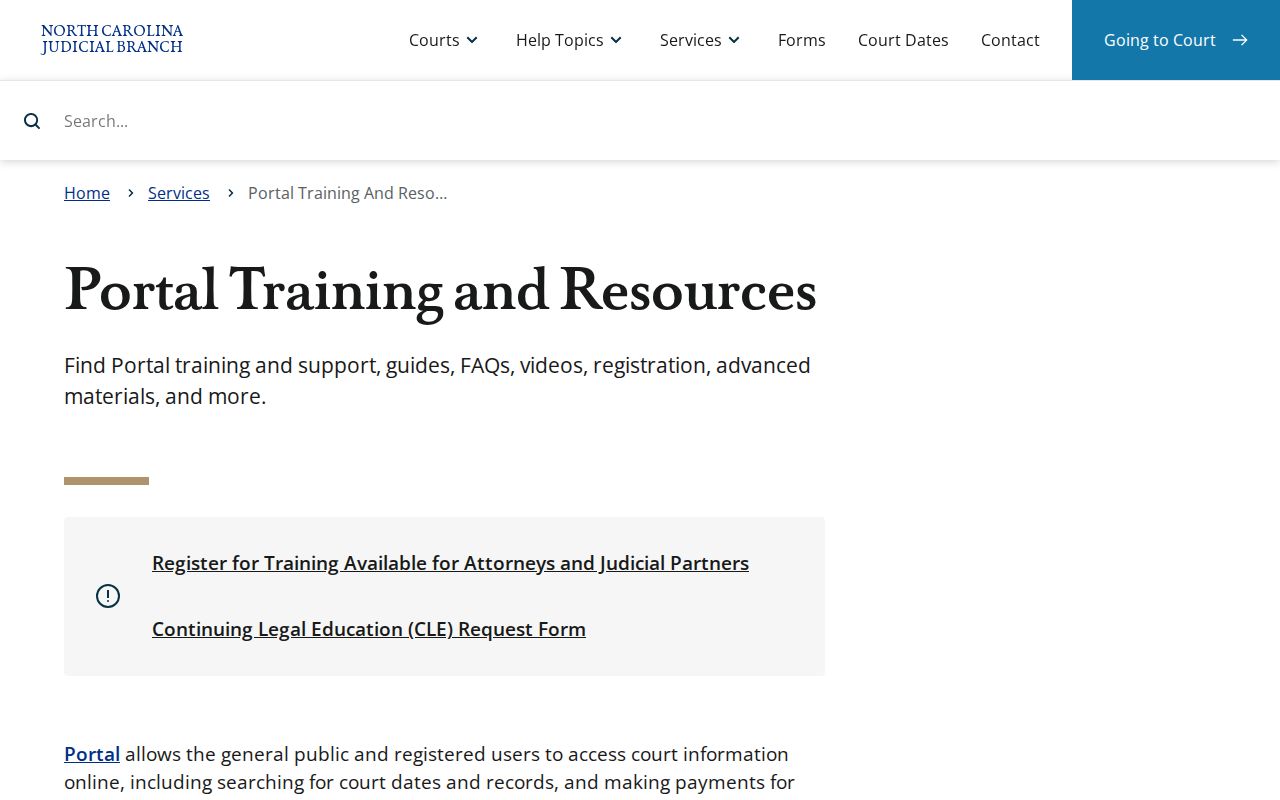
These controls matter when spelling, Ashe County case-number format, or a broad filter hides an Ashe County court case.
| Field or Control | Type | Required | Ashe Search Use |
|---|---|---|---|
| Search Criteria | Text | Yes | Ashe County case number or party name; wildcards allowed |
| Advanced Filtering | Panel | No | Cannot run alone; first enter search criteria |
| Location | Dropdown | No | Select Ashe County or the relevant court location |
| Party Criteria | Fields | No | Name and date-of-birth filters; advanced party search can limit wildcard results |
| Case Type and Status | Dropdowns | No | Narrow criminal and open or disposed matters |
| Filing Date | Date fields | No | Limit Ashe County results to a filing range |
| Search Hearings | Portal tab | No | Search by case, party, attorney, judicial officer, or courtroom |
Ashe Criminal Courts Compared
The charge level controls where an Ashe County criminal case proceeds. Ashe County District Court is not merely a lesser copy of Superior Court. It resolves Ashe County misdemeanors and infractions and handles preliminary felony work. Ashe County Superior Court receives felony trials, indictments, and qualifying appeals. The same Ashe County clerk's office connects the records, but a searcher should still read the court division and case events.
| Court or Office | Main Criminal Role | Contact |
|---|---|---|
| Ashe District Court | Misdemeanors, infractions, and preliminary felony matters | 336-219-1400 |
| Ashe Superior Court | Felony trials, expunction petitions, and misdemeanor appeals de novo | 336-219-1400 |
| Magistrates | Warrants, initial process, and release conditions | 336-219-1419 |
| District Attorney | Charging and prosecution, not custody of the court file | 336-219-1410 |
Note: The active criminal courthouse is at Government Circle, not Jefferson's historic 1904 courthouse on East Main Street.
Inside an Ashe County Case File
An Ashe County Portal Case Summary can show the case number, location, case type, filing date, status, nonvictim parties, attorneys, charges, events, hearings, dispositions, and financial data. An Ashe County case section appears only when it contains data. Electronically eligible documents may be downloadable, while other public Ashe County documents remain in the paper file. The chronological register of actions is often the best place to trace what happened and when.
| Case Number and Court | Enterprise Justice number, Ashe location, division, type, filing date, and status |
|---|---|
| Charging Record | Filed charge or cause and the statute or description shown in the public case data |
| Docket Entries | Chronological events, filings, motions, and register-of-actions entries |
| Hearing Details | Date, time, courtroom, and judicial officer when assigned |
| Disposition and Judgment | How each charge ended, including plea, conviction, dismissal, or acquittal |
| Sentence and Financials | Judgment terms plus costs, fees, restitution, and supervision fees when present |
The Ashe County case file should be read charge by charge. One count may be dismissed while another ends in conviction, and the Ashe County booking allegation may not match the final filed charge.
Older Ashe Criminal Case Documents
A blank Ashe County Portal document list does not prove that no public file exists. Converted Ashe County cases can retain a case summary without every older Ashe County paper document online. Search again with a wildcard, confirm the -040 county identifier, and check the Ashe County case status. If the record still cannot be found, use the free public terminal or ask the clerk to locate the paper or archived file.
The Judicial Branch court-record access instructions distinguish online case information, courthouse terminals, paper files, and copies. That official access page is pictured below.
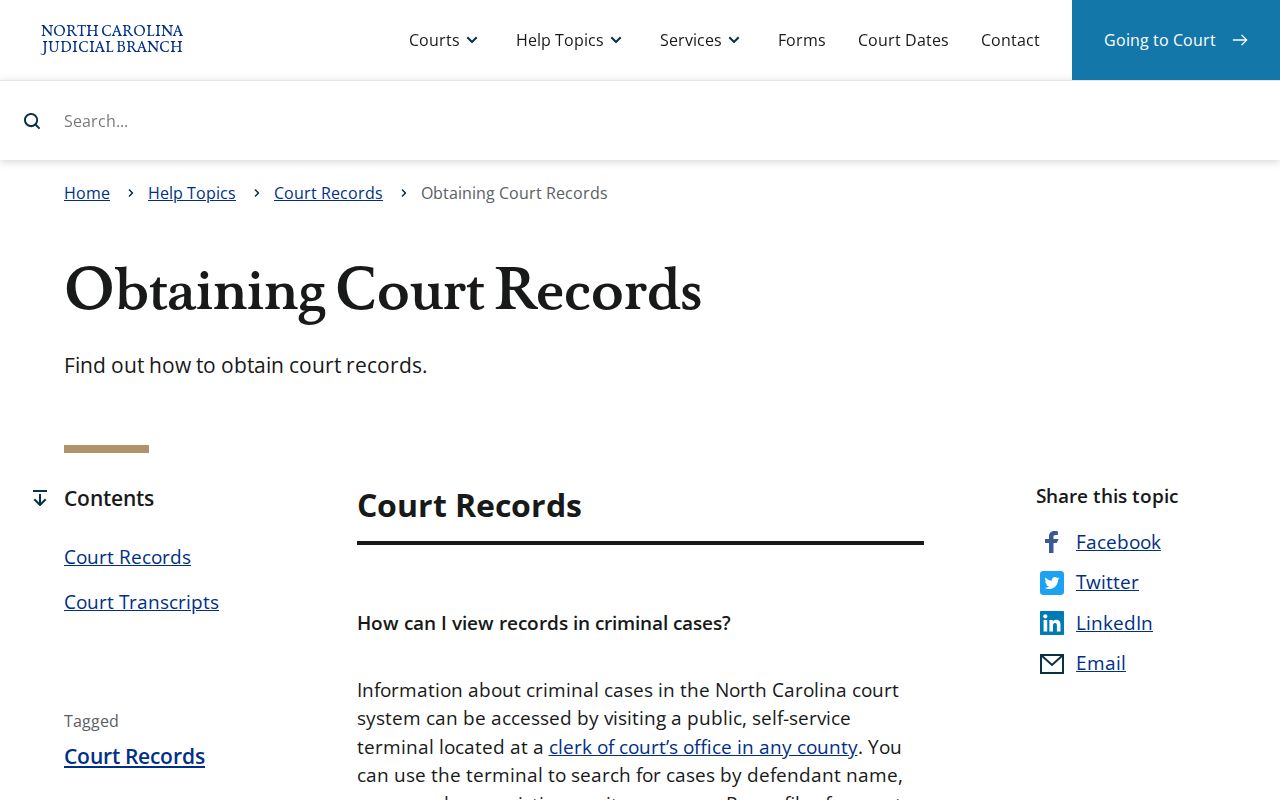
For a certified Ashe County name-based result, submit form AOC-CR-314 and the researched $25 fee to the Ashe County clerk. That search covers Ashe County court records only.
How a Criminal Case Moves
An Ashe County case may begin with a citation or arrest. An Ashe County magistrate handles initial process and release conditions, and the prosecutor evaluates which charge proceeds. A felony can advance through indictment before arraignment. Discovery and pretrial motions build the Ashe County record before a plea or trial. Judgment and sentencing follow a conviction, while an appeal can add later entries. North Carolina requires prompt presentation to a judicial official without needless delay, but the research supports no fixed hourly promise for every Ashe County case.
Case flow: Charges Filed → Arraignment → Pretrial → Plea or Trial → Disposition → Sentencing
An Ashe County District Court misdemeanor conviction may be appealed to Superior Court for a new trial. That Ashe County de novo appeal is not simply a review of the first hearing. Read later events and the final judgment before treating an earlier result as current.
Reading Ashe Case Dispositions
Ashe County dispositions explain how each filed charge ended. Portal event text can be brief, so several plain terms are especially useful when reviewing an Ashe County criminal court case.
- Disposition
- The final result for a specific charge.
- Voluntary dismissal
- A prosecutor formally ends the pending charge, often shown as VD.
- Acquittal
- A not-guilty judgment because guilt was not proven.
- Indictment
- A grand jury's formal felony accusation, also called a true bill.
- Deferred prosecution
- Prosecution is postponed under conditions and may later end in dismissal.
An Ashe County disposition must not be inferred from bond, release, or a booking report. The Ashe County case summary and judgment are the proper sources. Readers comparing an arrest allegation with the later prosecution can also consult the Ashe County arrest lookup for the distinct booking layer.
Ashe Clerk Case Access
The Clerk of Superior Court is at 150 Government Circle, Suite 3100, Jefferson, NC 28640. The counter and courthouse are listed for weekdays from 8:30 a.m. to 5:00 p.m.; the main number is 336-219-1400. Visitors can use a free public terminal, inspect a public paper criminal file, and request copies. Certified single-county searches use AOC-CR-314. Mail payment must be a money order or certified check, while the researched in-person options include cash, credit card, money order, or certified check.
Ashe Clerk of Superior Court
150 Government Circle, Suite 3100
Jefferson, NC 28640
336-219-1400
Monday through Friday, 8:30 a.m. to 5:00 p.m.
A Judicial Branch public-record request is not the route for a specific court case file. The state public-record request page addresses administrative records and explains that case files belong with the clerk.
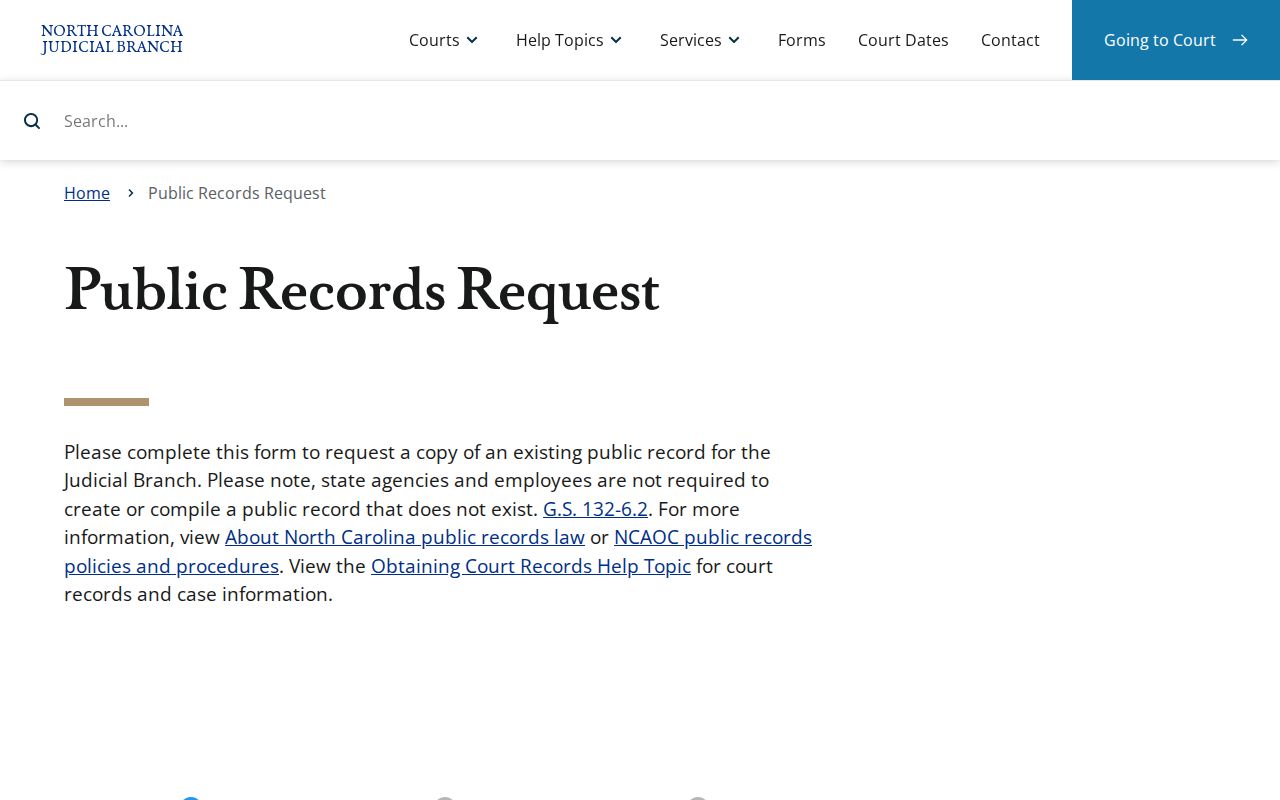
This Ashe County distinction keeps a request with the office that can retrieve the actual Ashe County criminal case record.
Case Record Access & Restrictions
North Carolina G.S. 7A-109 directs clerks to maintain court records for public inspection and copying, subject to confidentiality laws and remote-index rules. Public access does not mean that every record or document appears online. Juvenile matters, sealed cases, protected identifiers, victim information, and sensitive documents can be withheld or redacted. Victims do not appear in Portal party-search returns.
An Ashe County file can therefore have a public docket and restricted documents at the same time. A reader who sees no online Ashe County document should ask the clerk whether a public paper file exists. Ashe County audio recordings, when they exist, follow separate Judicial Branch request forms and rules. Criminal District Court proceedings are not routinely recorded except for specified pleas or by court order.